The Wet-Season Hoof Audit: Reading a Hemp Bed From the Ground Up
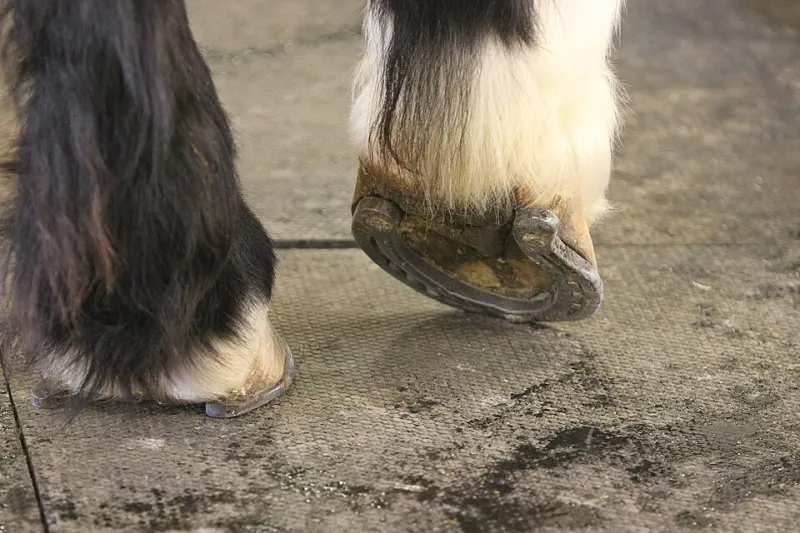
Photo: Heather Moreton, CC BY 2.0, via Wikimedia Commons
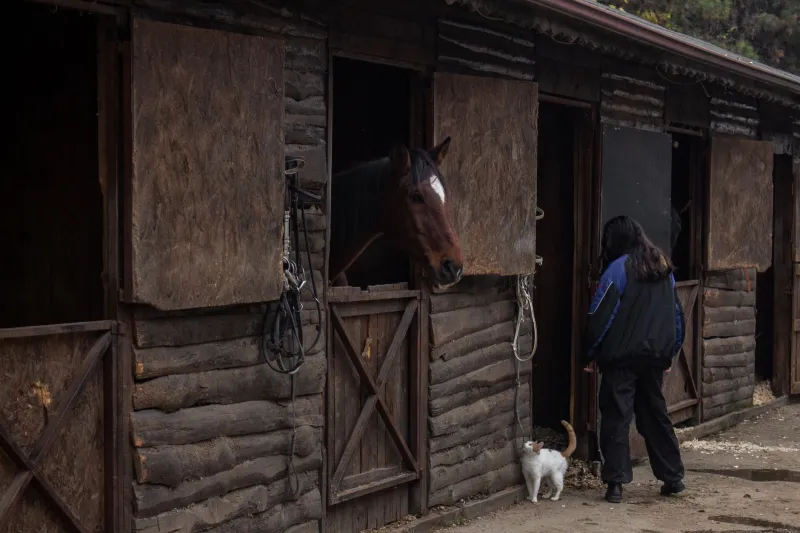
By the time November settles in, most UK yards are living with some version of the same scene: muddy gateways, clipped horses turned out for shorter windows, and beds that take a proper hammering overnight. Hemp bedding has earned a growing following for soaking up urine and holding ammonia, but a wet winter is the real test. The question is not whether hemp can absorb water. It is whether the bed under the hoof stays in a state that helps the hoof, rather than simply moving the wet somewhere else.
First, separate the bed from the bog
A common mistake is to expect bedding to fix a drainage problem. If a stable floor slopes the wrong way, if rubber mats trap water underneath, or if the horse walks through a muddy gateway before standing in the box, no bedding will undo that. Hemp can take a lot of moisture, but it is not a sump pump.
Stand at the stable door after a wet night and look at the whole route. Is there a clean, dry standing area outside the box? Does water run towards the bed or away from it? Are the mats lifting at the edges? A farrier will often spot the consequences before the yard owner does: soft soles, crumbling white line, or a horse that shifts weight on the harder part of the floor. Those signs do not prove the bedding is at fault, but they do ask whether the bed is being asked to do too much.
What absorbency actually buys you
Hemp’s selling point is that the fibre takes up moisture quickly and holds it within the bed rather than leaving a wet patch on the surface. In practice, that can mean a drier top layer for a horse standing in the box, provided the wet material is removed often enough. It can also mean the bed feels dry underfoot for longer than a straw or shavings bed might.
But absorbency has a limit. Once the lower layer is saturated, the bed becomes a damp mattress. Hemp that is not mucked out properly can compact into a heavy, cool base that holds moisture against the sole. That is not the same as a wet patch of urine, but it is still a wet bed. The farrier’s eye is useful here because hooves show the difference between a brief wetting and a long, slow soak.
The farrier’s test, and the vet’s caveat
A farrier working through a run of winter visits tends to notice patterns. Hooves that are constantly wet may look softer, with more wear on the sole and a white line that picks up grit. Hooves that are too dry can crack and chip. The aim is not a bone-dry hoof; it is a hoof that can handle moisture without staying waterlogged.
A vet will add the obvious caveat: bedding is one factor among many. Diet, turnout, hoof care, circulation, and underlying conditions all matter. Hemp is not a hoof treatment and should not be sold as one. What it can do is remove some of the wetness and ammonia load from the horse’s immediate standing area, which is a modest but useful contribution.
Depth, base and the daily fork
The most useful check is also the least glamorous. Pick up a forkful from the middle of the bed and look at what is underneath. Is there a clean, dry base layer, or is the hemp dark and heavy all the way through? Does the bed move freely, or has it packed into a slab?
Depth matters, but more is not always better. A very deep hemp bed can be forgiving for a thin-skinned horse, but it can also hide wet patches and make daily removal harder. A useful rule is to keep enough depth to cushion the hoof and separate it from the floor, while still being able to find and lift the wet spots. On mats, that often means a bed that is deep enough to bank up at the walls but not so deep that the centre becomes a reservoir.
Mucking out little and often beats a heroic weekly dig. Remove droppings at least twice a day, lift the obvious wet patches, and top up with dry hemp. Leave the bed open to air when the horse is out. If the stable has poor ventilation, the bed will stay damper for longer, and the ammonia smell will tell you before the hoof does.
Warning signs in the hoof and the bed
Look for hooves that are persistently soft at the sole, a white line that has become wide or gritty, or a strong thrush smell around the frog. A horse that is reluctant to stand on the bed, or that chooses the bare floor instead, is worth watching. These signs can have several causes, so bring in your farrier or vet rather than blaming the bedding alone.
In the bed itself, watch for hemp that stays clumped and dark in the same spot, a damp smell that returns quickly after mucking out, or water pooling under the mats. If the bed is wet within a few hours of a full muck out, the problem is likely drainage, ventilation, or the amount of time the horse spends standing in.
A yard-level checklist for the wet months
- Check the floor slope and mat edges before blaming the bedding.
- Keep the area outside the stable as dry as practical; muddy feet bring the weather in.
- Lift wet patches daily rather than relying on absorbency to cope.
- Keep the bed open and aired when the horse is turned out.
- Watch for soft soles, white line changes, and reluctance to stand.
- Ask your farrier what they are seeing across the yard, not just in one box.
Hemp bedding can be a sensible choice for a wet UK winter, but only when it is treated as part of a system. The hoof is a good judge. If the bed is dry on top, clean underneath, and easy to work, the horse will usually tell you. If it has become a heavy, holding mat of wet fibre, no amount of absorbency marketing will make it a good place for hooves to stand.