Carbon on the Muck Heap: Field-Testing Hemp Bedding's Green Claims
There is a particular look that comes over a livery yard when someone mentions carbon footprint. Half the yard nods sagely; the other half quietly hopes the conversation will move on to haylage before anyone suggests a spreadsheet. Fair enough. But if you are paying a premium for hemp bedding on the promise that it is kinder to the planet, it is worth knowing where that promise actually lives. Is it in the field? The lorry? The stable? Or the slightly steaming heap behind the barn?
We decided to find out the yard way: with a notebook, a set of kitchen scales and a month of normal mucking out. No lab coats, no life cycle assessment software, just a determination to ask better questions before handing over the card.
Start with the right unit of comparison
The first trap is comparing bales. A hemp bale and a shavings bale are not the same thing, any more than a haynet and a haylage net are. The only fair unit is something like one stable, bedded to a sensible depth, for one week. Once you frame it that way, the conversation changes. Suddenly you are asking how many bales you actually get through, not how much one bale costs on the merchant's website.
On our trial bed — a 16.2hh gelding who treats his stable like a dance floor — we weighed every bale in and logged every barrow out. The hemp bed settled more firmly and needed topping up less often, but the difference was not the miracle some suppliers suggest. It was enough to matter, though, and it is the foundation for any honest carbon conversation.
The field, the retting and the awkward water question
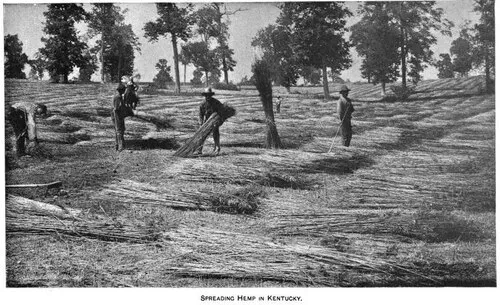
Hemp for bedding is usually the woody core of the plant — the hurd or shive — left after the fibre has been taken for other uses. That is a genuinely good story: a by-product finding a second life. But by-product does not mean zero impact. The plant still had to be grown, harvested and retted.
Retting is the bit that rarely makes the marketing leaflet. It is the process that breaks down the pectin holding the fibre to the hurd, and it can be done in the field, where dew and rain do the work over several weeks, or in tanks, which use water and need managing. Neither is automatically villainous, but they are different. Ask which method your supplier's material went through and where.
There is also the question of origin. Some hemp bedding sold in the UK is grown here; plenty is imported from France, the Netherlands or further east. That is not a scandal — the UK does not grow enough hemp for every stable in the country — but it does shape the next part of the story.
The lorry is often the biggest slice
Haulage is the unglamorous heavyweight of most bedding life cycles. Kiln-dried shavings are frequently shipped in from the Baltics, and the drying process itself is energy-hungry. Hemp that has travelled from mainland Europe in a lorry is not carbon-free either. The greenest bale in the yard is usually the one that came from the nearest farm, whatever it is made of.
This is where a bit of polite scepticism pays. "Locally sourced" can mean grown in the next county or merely packed in a shed down the road from imported raw material. Ask for the postcode of the field, not just the warehouse.
What the stable does to the sums
Here is where hemp genuinely earns its keep. A good hemp bed is absorbent, and absorbency means fewer bales per week and a drier bed. That translates into fewer lorries, less packaging and less frequent topping up. It also means less bedding going out to the muck heap, which brings us to the part nobody puts on the website.
The muck heap does not lie
Spent bedding has to go somewhere. On most UK yards that means a muck heap, a farmer's spreader or a skip. Hemp breaks down reasonably well in compost, and many yards report it rots down faster than shavings. But the honest carbon calculation depends on what actually happens to it, not what could happen in ideal circumstances.
If your spent bedding goes to a local farmer who spreads it on arable land under a registered waste exemption, that is a reasonably short, sensible loop. If it goes into a skip and travels forty miles to an energy-from-waste plant, the sums look different. Neither is shameful, but you cannot claim the first while doing the second.
Where yards can legitimately count a saving
There are real wins, and they are worth naming clearly:
- Fewer bales in. Fewer bales bought means fewer lorries, less plastic packaging and less manufacturing.
- Less volume out. A more absorbent bed often produces a smaller muck heap, which means fewer trailer movements.
- Shorter supply chains. If you can buy from a UK grower or processor within reasonable distance, that is a genuine cut.
- A disposal route you can actually trace. Composting or local agricultural spreading beats a long skip run.
What you should not do is add all of that up and announce that your yard is carbon neutral. It is not. It is doing some things better than it did before, which is a perfectly respectable position.
Where the claims tend to wobble
A few phrases deserve a raised eyebrow. "Carbon neutral" without a detailed offset explanation is doing a lot of heavy lifting. "Greener than shavings" is only true if you compare like with like — a locally grown hemp bale against a kiln-dried import, yes; a hemp bale hauled across Europe against a UK sawmill offcut, less so. And watch for packaging: a plastic-wrapped bale with a plastic net is still a plastic-wrapped bale.
A simple question set for suppliers
If a rep comes calling, these are the questions worth asking. You will not always get answers, but the ones who have done their homework will appreciate being asked.
- Where was the hemp grown, and where was it processed?
- Was it field-retted or tank-retted?
- What is the typical haulage distance to my yard?
- How does one bale compare in absorbency to the shavings I use now?
- What is the packaging made of, and can it be recycled or returned?
- Do you have any independent life cycle data, and what does it cover?
- What happens to spent hemp bedding in your recommended disposal route?
- Are your environmental claims verified by a third party, or self-declared?
The yard verdict
Hemp bedding is a good product with a decent story. It is absorbent, it breaks down, and it often reduces the number of bales you get through. But the green halo is not automatic — it depends on where the bale came from, how far it travelled and where it ends up. Audit the whole journey, not just the label, and you will be in a much stronger position to say what your yard is actually doing. Which is, in the end, the only claim worth making.