From Fenland Field to Stable Floor: Following a Hemp Bale Through the UK Supply Chain
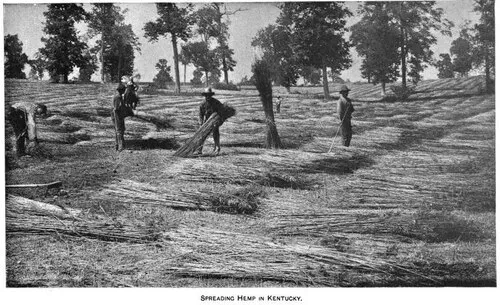
Photo: Charles Richards Dodge, Public domain, via Wikimedia Commons
The bale on the barrow
By the time a bale of hemp bedding reaches your stable door, it has been reduced to a single, satisfying fact: it is heavy, it is dry, and it does not blow about in the wind. Everything interesting has already happened somewhere else.
That somewhere else matters more than most horse owners realise. Hemp bedding is not a single product. It is a category with a wide spread of quality, and the differences are decided long before the bale is wrapped — in the field, at the processor, and in a screening plant that either does its job properly or does not.
The field: a late-summer harvest
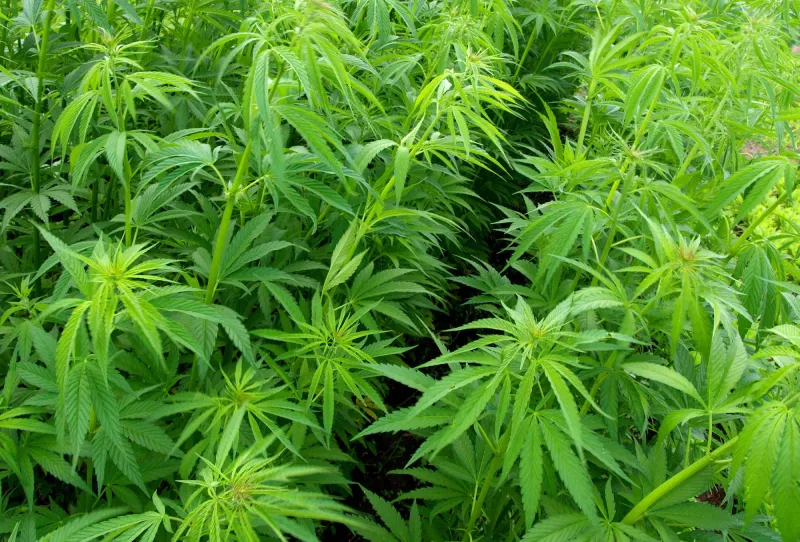
Hemp for bedding is grown for stalk, not seed. In Britain it goes in from late April through May and comes off in late August and September, ideally in a dry spell that lets the stems ret off in the swathe before baling.
Hemp cultivation was licensed again in the UK from 1993 after decades in the wilderness, and the crop has steadily found a niche on heavier eastern soils — the Fens, Lincolnshire, parts of Norfolk, pockets of Yorkshire and the Borders. It is a useful break crop, it roots deep, and it wants relatively little in the way of inputs, which is part of its environmental pitch.
But a field of hemp is not a bale of bedding. The raw straw has to be processed.
The processor: shives, hurd and the bits that matter
Hemp stalk has two components. The outer fibre — bast — is the valuable long fibre used in textiles, composites and insulation. The inner woody core, the hurd or shive, is what ends up in horse bedding.
Decortication separates the two. The best bedding producers take the hurd, kiln-dry it to a consistent moisture level, and screen out the fines and dust that would otherwise end up in your horse's airway. The rest of the trade sells what comes off the line, and that is where quality diverges sharply.
This is the single most useful thing to understand as a buyer: dust does not appear at the yard. It is either removed at the plant or it is not.
What 'dust-extracted' really means
It is an unregulated phrase. A supplier with good kit can point to a screening specification, a moisture target and a bag or bale that has been tested. A supplier without it will tell you the product is dust-extracted because it does not look too bad in the barn.
Practical test at the yard: open a bale over a dark surface on a still day and shake a couple of handfuls. Then fill a bucket with water and watch how quickly the material sinks and how cloudy the water goes. Fines and dust show up in both. Do it beside a shavings bale for comparison and keep notes — this is exactly the sort of thing worth recording in a winter bedding trial rather than arguing about on the internet.
Absorbency, bale weight and the numbers that flatter
Absorbency claims tend to be given as a multiple of the material's own weight in water. That is a laboratory figure and it is not wrong, but it tells you very little about a box bed with a wet horse standing on it.
The figures worth asking about are duller: dry matter content, bale weight in kilos, how tightly compressed the bale is, and whether the weight is consistent pallet to pallet. A bale that varies by a couple of kilos either side is a bale that makes a mockery of your per-stable-per-week cost sums.
Ask, too, how the product behaves when it is reused. Hemp's selling point in a deep-litter or semi-deep-litter system is that the top lifts off cleanly and the base stays dry. If you are mucking out fully every day, you are spending hemp money for shavings habits.
Provenance: what British-grown actually buys you
Hemp bedding sold in the UK may be grown and processed here, grown here and processed abroad, or imported outright. None of those is automatically bad. But the implications differ.
British-grown, British-processed material means shorter haulage, a supply chain you can telephone, and a bale whose moisture content has not spent a fortnight on a ferry. It also means the crop has been grown under UK licence and inspected accordingly. For a yard weighing welfare, waste and winter costs, that is a genuine advantage in 2026, when haulage rates and import paperwork have made imported bedding less of a bargain than it once was.
Sustainability claims deserve the same scepticism. Hemp genuinely sequesters carbon as it grows and needs little pesticide, which is a fair thing to say. A supplier who claims their bedding is carbon neutral should be able to say what that covers — the field, the drying plant, the haulage — because kiln drying is energy hungry and the numbers change the story.
Questions to put to any supplier before you commit
- Where was the hemp grown, and where was it processed?
- What is the screening specification, and what moisture content do you dry to?
- What is the standard bale weight, and what tolerance do you work to?
- Can you send two yard references in our county?
- What is your lead time in December, not in July?
- If you run out, do you substitute, and with what?
- Do you supply loose or wrapped, and how should a pallet be stored over winter?
- What does your sustainability claim actually cover?
A supplier who answers all eight without flinching is worth the premium. One who answers three and changes the subject is telling you something useful too.
The last hundred yards
The chain ends in a wheelbarrow, and that is the only place the claims get settled. Buy on the field and the plant as much as the bale — and give it a proper month before you decide, because hemp's real test is not the first night, it is the fourth week of a wet January when everything else in the yard has turned to soup.