Churned, Not Rested: Hemp Beds for the Horse That Won't Stand Still
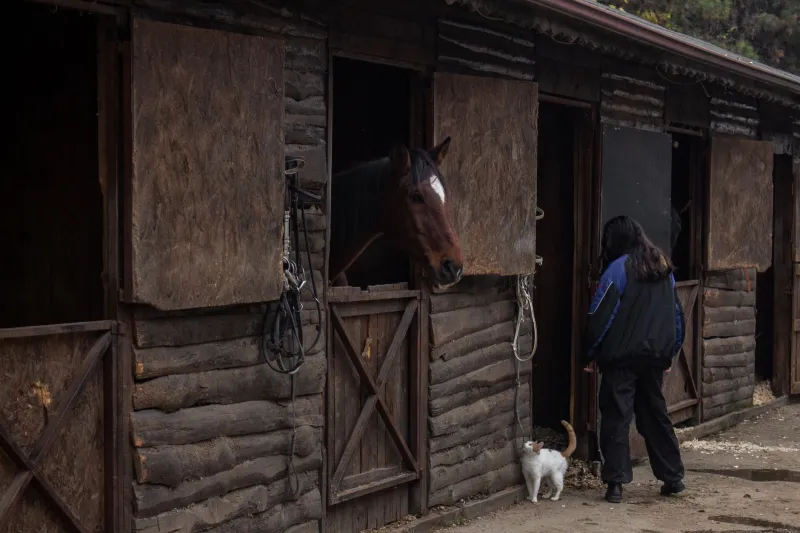
There's a particular sound on a yard at 6am: the soft, rhythmic crunch of a horse that has spent the night doing laps of its box. You open the door and the bed looks less like bedding and more like a ploughed field. For owners of box-walkers, weavers and pacers, this is just Tuesday.
Hemp bedding has earned a solid reputation on UK yards for being absorbent, low-dust and slow to break down. But a horse that won't stand still puts any bedding under a different kind of pressure. The bed isn't resting; it's being trafficked. Here's what that means in practice.
Why a Churned Bed Behaves Differently
A settled horse urinates in roughly the same spot, picks at its hay and leaves most of the bed fairly intact. A box-walker spreads the work. Droppings get trampled into the surface, wet patches are walked through rather than left to clump, and the top layer is constantly turned over like a gardener working a border.
The upside of hemp in this situation is that the fibres are tough. They don't collapse into mush as quickly as some softer bedding materials, and they hold their structure under foot. The downside is that a churned hemp bed can look dry on top while hiding wet pockets underneath. You can't judge it by colour alone.
Depth, Banks and the Art of Leaving It Alone
The temptation with a restless horse is to keep adding bedding until the box looks deep and inviting. That can backfire. A very deep loose bed gives a box-walker more material to move around, and more material to trample wetness into.
Aim for a firm, level base of around 10–15cm across the main floor, with a modest bank at the walls. The bank should be there for support and for catching droppings, not as a decorative snowdrift. Hemp banks hold their shape reasonably well if you build them by patting rather than piling.
If your horse paces the walls, watch where the bank gets flattened. That's your traffic lane. Rather than fighting it, bank slightly heavier on the opposite side and keep the walked edge firm. The bed will look asymmetric, but it will work better than a perfectly groomed box that gets destroyed by midnight.
Fork Technique When the Bed Is a Treadmill
With a quiet horse you can lift the wet out in tidy squares. With a box-walker, you're more of an archaeologist. Use a four-tine fork and work from the door inwards, turning the top layer aside rather than digging straight down. Look for the darker, heavier clumps — hemp that has taken up urine will feel denser and smell sharper than the dry fibre around it.
The trick is not to over-fork. Every time you turn the whole bed, you're aerating it, which sounds helpful but also breaks up the stable base and gives a restless horse more loose material to plough through. Remove the wet and the droppings, shake out the banks lightly, and leave the rest alone.
A light sprinkling of fresh hemp over the walked areas can help keep the surface dry, but don't top up blindly. If you're adding a full bale every few days for a single horse, something else is going on — either the drainage is poor, the horse is drinking heavily, or the bed is being managed too aggressively.
Dust and Ammonia Under Heavy Traffic
One of hemp's selling points is that it's low in dust, which matters on any yard but especially in a stable where the air is being disturbed all night. A horse in constant motion kicks up whatever is on the floor. Hemp's heavier, denser fibres tend to settle rather than float, which is a genuine plus for respiratory health.
Ammonia is the bigger test. A churned bed can trap urine in pockets that never get exposed to air, and that's where the smell builds. The answer isn't more bedding; it's more consistent removal. Muck out the wet spots daily, keep the surface dry, and make sure the stable has decent ventilation above the horse's head. If you can smell ammonia at chest height, the horse is breathing it.
When Hemp Helps — and When It Doesn't
Hemp is a good tool for managing a box-walker's bed. It is not a cure for box-walking. If a horse is pacing because it has no turnout, too little forage, no sight of other horses, or a stable that's too small, changing the bedding won't fix the cause. It will just give the horse something else to walk on.
Before you spend money on a pallet, look at the basics: how many hours out of the box, how much hay is available, whether the horse can see or touch a neighbour, and whether the stable is large enough for the horse to lie down and roll without hitting the walls. Hemp can make the box more comfortable and easier to keep clean, but it can't replace routine, turnout and company.
Yard Case Notes
On a Surrey livery yard, a 16.2hh gelding who box-walked the walls was moved onto hemp after years of shavings. The owner found that a firmer, shallower bed with a single heavy bank reduced the amount of material dragged around. The horse still paced, but the bed stayed drier and the muck heap shrank.
A Devon yard tried hemp for a mare who weaved at the door. The bedding coped well with the droppings she passed while weaving, but the real improvement came when a grill and a stable mirror were fitted. The hemp did its job; the management did the rest.
In Yorkshire, a small private yard found that a box-walker on hemp needed more frequent skipping out rather than deeper beds. Twice-daily removal of droppings and wet kept the surface dry, and the owner stopped topping up every other day. The lesson: with a restless horse, frequency beats volume.
A Daily Inspection Checklist for Vice-Prone Horses
- Surface dry? Run a hand over the top layer. If it feels cold or damp, dig a little deeper.
- Traffic lanes clear? Remove droppings from the walked path first; that's where they get ground in.
- Wet pockets found? Lift the darker, heavier clumps rather than turning the whole bed.
- Banks intact? Rebuild flattened banks lightly, but don't create a deep loose edge for the horse to plough through.
- Smell at chest height? If ammonia is noticeable, increase removal and check ventilation.
- Drinking and droppings normal? A sudden change in either can point to a health issue rather than a bedding problem.
- Turnout and forage sorted? A bed can't fix a routine that gives the horse nothing else to do.
The Bottom Line
Hemp bedding suits the horse that won't stand still, provided you manage it as a working surface rather than a show bed. Keep it firm, keep it clean, and don't try to out-depth a box-walker. And if the pacing is persistent, call in your vet or a behaviourist — the bed is only one part of the picture.