Small Visitors, Big Clues: A Wildlife Walk-Round for Hemp-Bedded Stables
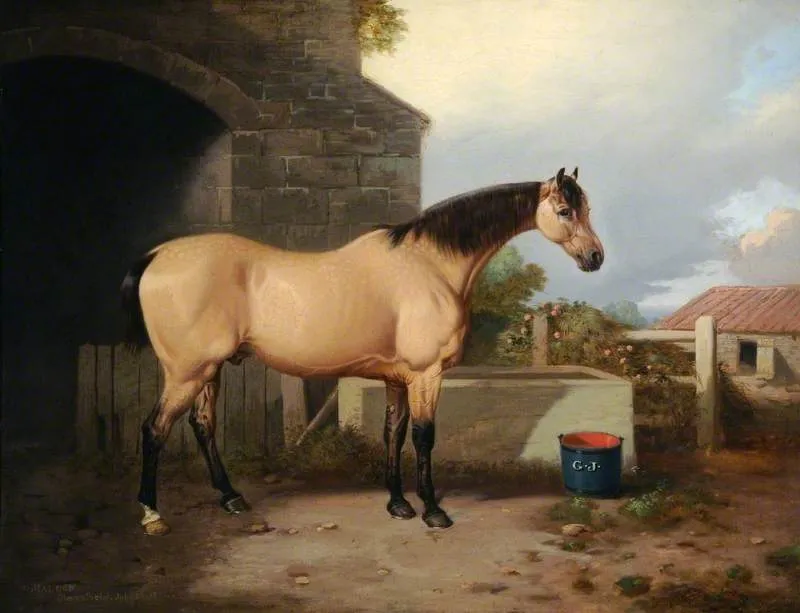
Photo: William Malbon, Public domain, via Wikimedia Commons
Nobody puts "resident mouse" on the livery advert, but most yards have one. Probably several. Hemp bedding, with its soft texture and knack for holding a dry, warm base, is genuinely comfortable stuff — and not just for the horse. If you've switched over in the last season or two, you may have noticed the local wildlife adjusting its habits accordingly.
The trick is not to panic and not to reach straight for the strongest thing on the shelf. Small visitors are a diagnostic tool as much as a nuisance. Read them properly and they'll tell you where the damp is, which bale is getting old, and which corner of the yard needs a fork and an hour of your time.
Why hemp gets noticed
Hemp shavings and hurds are absorbent, low-dust and pleasantly warm to sit in — three qualities that appeal to anything looking for a dry nest. A well-managed hemp bed is also deep, which means there's a layer of material with a bit of loft and trapped warmth underneath. Mice love loft. Beetles love damp organic matter. Mites love a bed that isn't being fully stripped often enough.
None of that is a fault of the bedding. It's a fair description of what bedding does. The point is that hemp gives you very clear feedback: it goes dark and claggy where it's wet, it holds its structure where it's dry, and a bale that's taken on moisture announces itself with a smell and a bit of warmth in the middle. Use that.
The usual suspects
In a British yard you're broadly looking at four groups.
Rodents. House mice are near-universal; rats tend to follow spilled feed and unsecured bins rather than bedding itself. Mice will nest in a bale stack, in the void behind a rubber mat, in the hay steamer housing, in the drawer of the feed room. Their droppings are the thing that actually matters, because of the contamination risk to feed and water buckets.
Beetles and mites. Small brown beetles in damp bedding, or the fine greyish dust that signals mite activity, are usually a moisture story. So are the tiny flies that appear in summer around wet spots. If your hemp is doing its job and the wet is being lifted out daily, these stay rare.
Birds. Sparrows and swallows in the rafters are mostly a pleasure. Pigeons are not — droppings on the bed, in the water trough, on the hay.
The harmless majority. Spiders, harvestmen, the odd slow worm under a pallet, hedgehogs behind the muck trailer. These are neighbours, not problems, and several of them are actively eating the ones you do care about.
The ten-minute walk-round
Do this monthly, and again whenever something feels off. Take a torch and a notebook. No fork in your hand — you're looking, not mucking out.
Start outside. Look at the base of the bale stack. Are the pallets sitting on hard standing or slowly sinking into mud? Is there a gap between the stack and the wall? Is the tarpaulin touching the ground, or is it pulled tight with an air gap? Lift one bale and look at the underside — damp patches, dark staining, a musty smell or a warm middle all mean that bale needs to leave the pile today.
Then the feed room. Bins with lids that actually clip. No open sacks on the floor. Check behind the bins, under the shelf, inside the kettle.
Then the stable itself. Drop to your knees with the torch and look along the wall plate under the mats. Check the corner where the bed is deepest, the gap behind the door, and around any pipework coming through the floor. Look at the bed surface in daylight: a scattering of small holes in the top of the hemp usually means mice are working through it overnight.
Finally, look up. Nests in the eaves, droppings on the ledge, gaps at the ridge.
What the signs actually mean
A tidy mouse hole in a bale stack and no droppings in feed = a storage story. Move the stack, raise the pallets, get an air gap, cull nothing.
Droppings in the feed bin, gnawed sack corners, a smell of urine around the feed area = a hygiene and access story that needs sorting within the week. That's a genuine horse-health issue, not just an annoyance.
Beetles or a sour whiff under the mat = wet bedding sitting too long. Strip the bed back, check the drainage falls the right way, and look at whether you're taking out enough wet each day.
Mite dust rising when you shake out a bale = the bale has been stored damp. Don't put it in a stable, and don't put it near a horse with sweet itch or a thin coat.
Making bales and beds less inviting
None of this requires chemicals. It requires dry, air and distance.
- Store hemp on pallets on hard standing, at least a hand's width from any wall, with the top and sides covered but the underside breathing.
- Rotate stock. Oldest bale used first, and write the delivery date on the wrap in marker.
- Never stack bales against a hedge, a fence line or the back of a muck heap.
- Keep feed in clipped bins, sweep the feed room floor weekly, and don't leave the scoops in the bin overnight.
- Lift the wet every day and don't let the deep-litter layer become a compost heap. If you're running a deep bed, keep the top dry and the base honest.
- Leave a bit of rough grass and a wild corner away from the yard. Predators do a lot of the work for you, and a barn owl on the hunt is worth ten traps.
Humane control, sensibly done
Live-catch traps baited with a little peanut butter, checked twice a day and released well away from any yard, are the standard option for mice. Snap traps inside lockable tunnel boxes are legal and effective and keep other animals out, which matters in a place with cats, dogs and curious terriers.
Be aware of the rules on rodenticides in the UK — professional use is tightly stewarded and glue traps are now heavily restricted in England. Poisons have no place in a stable with horses, however carefully they're placed. If rats are established, talk to a qualified pest controller and get a proper plan rather than a box of bait.
And be honest about welfare. A horse on a hemp bed doesn't care that there's a mouse in the corner. What it cares about is a dry bed, clean water and forage it hasn't shared with anything with a tail. Deal with the contamination, leave the wildlife alone where you can, and your yard will tell you far more honestly when something has actually gone wrong.