Where the Water Lands: Bedding a Soaked-Hay Horse on Hemp
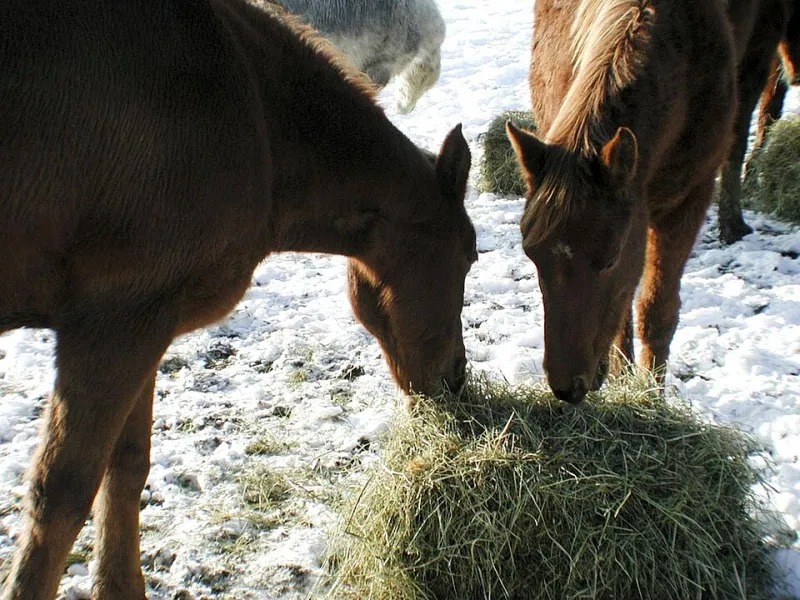
Photo: horse stable hemp bedding wet corner hay net UK yard, via learninghorses.com
A horse on soaked hay does not just get a wet feed. He gets a wet stable. The net drips, the bucket slops, and wet legs carry the yard in with him. On a hemp bed, that is not automatically a problem, but it does mean the wettest corner of the box deserves more thought than the rest of it.
Hemp is a useful bedding for this sort of routine because it takes moisture seriously. It is not a magic sponge, though. If you hang a soaked net over the same patch of bed every night, even the best hemp will eventually tell you about it. The trick is to work with the water rather than let it pick its own landing site.
The wettest corner is a design problem
Before you blame the bedding, watch the box for a week. Go in after the horse has had his hay and look at where the floor is darkest. Is it under the net, beside the bucket, or along the path from the door? Quite often it is all three, and they overlap.
That wet zone is where hemp will work hardest. It is also where a sour patch will start if the water arrives faster than the bed can deal with it. A good hemp bed should have enough depth to absorb and hold moisture below the surface, but it should not be so deep that the horse is standing in a swamp. For most UK yards, a settled bed of around 10 to 15 centimetres in the main area is a sensible starting point, with a slightly thicker layer in the wet corner and a taper towards the door.
Do not build a mountain in the corner just because that is where the drips fall. Hemp compacts under a horse, and a deep, tight bank can hold water instead of letting it drain. Keep it level enough that the horse can stand squarely, and keep the wet area forkable.
How hemp handles a nightly soaking
Hemp shives absorb moisture and swell slightly, which is why a little goes a long way compared with straw. In a soaked-hay box, that means the wet patch tends to stay more localised. You can usually lift the damp section without digging out half the stable.
That is the good news. The less good news is that hemp is not immune to poor ventilation. If the same corner is soaked every night and never aired, the fibres can pack down and go sour. You will smell it before you see it: a sharp ammonia note, darker clumps, and a patch that feels cold and heavy rather than springy.
Wet legs are part of the same story. A horse coming in from a muddy field will drop mud and water at the door. A small hemp pad at the entrance can catch that, but it needs changing more often than the main bed. Think of it as a doormat, not a bedding bank.
Siting nets, buckets and wet legs
Where you hang the net matters. If it is over the middle of the bed, the drip line will fall straight into the horse's sleeping area. If it is over a rubber mat or a hard standing, the water has somewhere else to go. Many yard owners find it helps to hang soaked nets over a mat at the edge of the bed, with a shallow tub underneath to catch the worst of the drips.
Water buckets are another obvious source. A bucket in the corner of a deep hemp bed is an invitation for spills to soak into the bedding. Put it on a mat, leave a gap between bucket and bed, and check the floor behind it daily. If the horse likes to paw, a heavier bucket or a fixed holder is worth the money.
For wet legs, dry off the worst before the horse goes in if you can. A towel or a bit of clean straw at the door will not solve everything, but it keeps the main bed from becoming the drying towel. The aim is not a sterile box. It is a box where the water lands somewhere you can manage.
Spotting a sour patch early
A sour patch rarely appears overnight. It starts as a damp, slightly darker area that does not spring back when you fork it. If you push your hand into the bed and it feels cold and clingy, that is a warning. If it smells of ammonia rather than fresh hemp, act before it spreads.
Lift the patch and a margin around it, not just the visible wet bit. Check the floor underneath. If the mat or concrete is wet, the problem is the source, not the bedding. Dry the floor, adjust the net or bucket, and top up with fresh hemp. Turning a sour patch over is not enough. It needs removing and airing.
This is also a welfare point. A horse stood on a damp, ammonia-heavy bed is not comfortable, and his respiratory system is doing extra work. Hemp can help reduce the wet footprint, but it cannot replace daily skipping out and a bit of vigilance.
Hemp versus shavings and straw on a soaked-hay yard
Shavings are easy to spot and light to fork, but they can be slippery when wet and often need frequent topping up. Straw is cheaper per bale on many yards, but it mats down and holds water in a way that can make a soaked-hay box hard work. Hemp tends to sit between the two: more absorbent than straw, heavier than shavings, and usually easier to keep in a localised wet patch.
The trade-off is cost and supply. Hemp bedding is not the cheapest option per bale, and UK availability varies. If you are comparing, look at cost per stable per week rather than cost per bale. A bed that lasts longer and needs less frequent full muck-outs can close the gap.
A simple weekly routine
Daily, skip out droppings, lift the wet spot under the net, and fork the damp corner so it can breathe. Top up little and often rather than dumping a fresh layer over a wet patch. Weekly, strip the wet corner back to the floor, check the mat, and let the area air while the horse is out. Monthly, take a proper look at the whole bed and ask whether the layout is still working.
A soaked-hay horse on hemp is not a difficult customer. He just needs the water to land in a place you can manage. Get the net, bucket and door right, keep the wet corner forkable, and hemp will do the rest without turning the whole stable into a drip tray.